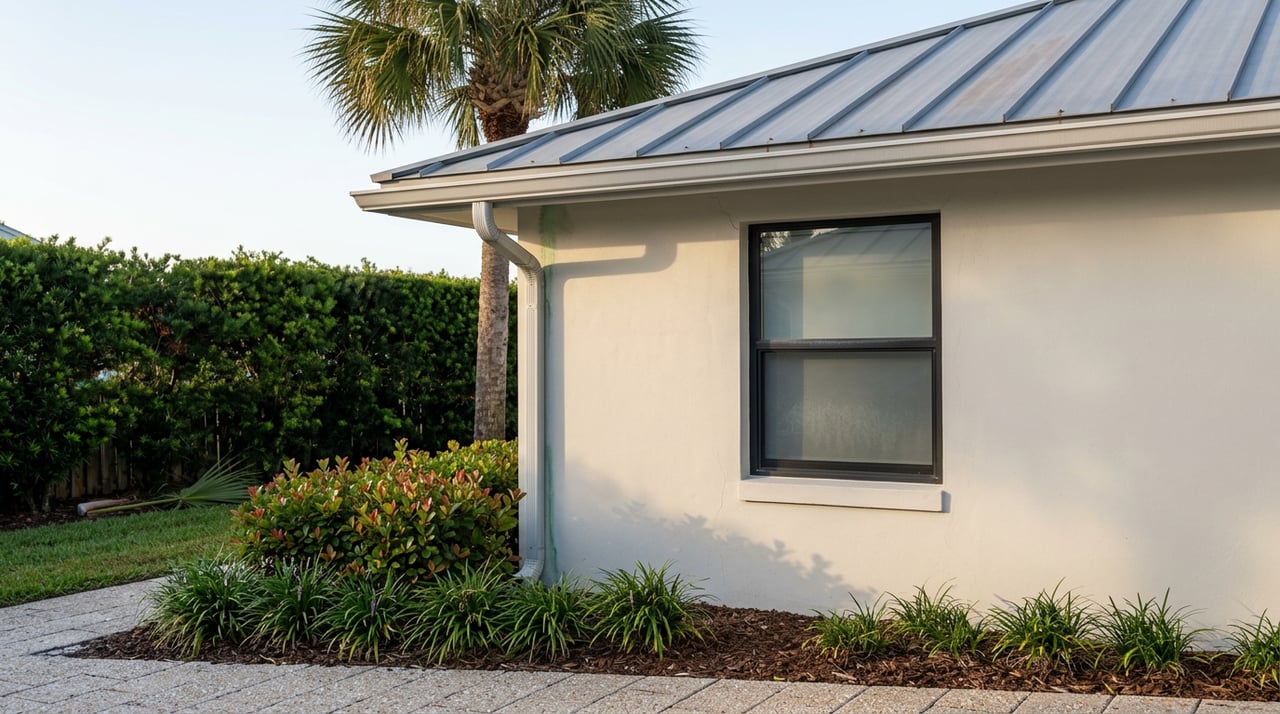
Ask most people shopping for a canal-front cottage in Rocky Point or a bungalow near Colorado Avenue whether an older Stuart home is a smart insurance bet, and you'll get the answer they already read somewhere else: no, not anymore, not in Florida. That answer tracked with what was happening statewide through 2024. It's increasingly wrong for Martin County in 2026, and the numbers explain why in a way most buyers never see before they're already under contract.
The real question isn't whether an older home here can be insured. It's which specific system in that home gets flagged during underwriting, and what it actually costs to clear that flag before closing.
The Inspection That Decides the Deal
Every insurer writing or renewing a policy on a Stuart home 20 years or older is going to ask for a four-point inspection first. It's a narrower look than a full home inspection, focused strictly on the four systems most likely to produce a claim: roof, electrical, plumbing, and HVAC. It typically runs $75 to $200 and takes under an hour.
That inspection, not the listing's year-built field, is the actual gate a sale passes through. If a buyer can't bind a policy, the mortgage doesn't fund, regardless of how well both sides agree on price. A property that seems perfectly marketable can stall for weeks over a panel type or a pipe material nobody thought to check before it went live.
The Assumption Most Buyers Bring With Them
The wariness isn't irrational. Between 2021 and 2024, Florida homeowners lived through the sharpest insurance-premium run in the country. The statewide average climbed from $2,520 to $4,480 a year, a 78 percent increase in three years, as a wave of carrier insolvencies pushed hundreds of thousands of policies into Citizens Property Insurance Corporation, the state's insurer of last resort. That's the story most relocators carry with them when they start looking at anything built before the building-code updates of the early 2000s.
It's a real story. It's also not the current story in this county.
What the Numbers Actually Show in Martin County
Citizens' footprint in Martin County has all but disappeared. The county's personal-residential policy count fell from 8,770 at the end of March 2024 to 1,543 by May 31, 2026, a decline of roughly 82 percent, with zero personal wind-only policies remaining in either count. Statewide, Citizens dropped from about 936,000 policies at the end of 2024 to 293,772 by the same May 2026 date. Private carriers only take on that much volume when they see risk they're comfortable pricing, not risk they're fleeing.
Martin County caught an additional break most homeowners never hear about: carrier-filing analysis for this market shows a roof-age underwriting change that moved several thousand older homes out of the high-risk surcharge tiers they'd been sitting in. It's a shift concentrated in this market, one that made a meaningful share of Stuart's older housing stock cheaper to insure than the generic Florida headline would predict.
Where the Real Line Sits
The mechanism behind that shift traces back to Florida Statute 627.7011, section 5. Once a roof turns 15 years old, an insurer can require an inspection to establish how much useful life is left. If that inspection confirms five years or more, the insurer generally cannot refuse to issue or renew the policy on age alone. The line that matters isn't 30 years or 50. It's 15, and it's a line a roof can pass or fail depending on material and condition, not just a calendar.
That distinction shows up clearly across roof types:
| Roof Material | Typical Insurable Life |
|---|---|
| Asphalt shingle | 15 to 20 years |
| Tile (clay or concrete) | 25 to 40 years |
| Metal | 30 to 40+ years |
| Flat | Under 10 to 15 years, hardest to place |
A shingle roof installed the same year a tile roof went up two streets over will hit its insurance ceiling first. In Stuart's older canal and historic neighborhoods, where roof replacement dates are all over the map, that difference matters more than the home's overall age.
Here's roughly what happens once a roof crosses that 15-year mark in this market right now:
- The carrier flags the policy at renewal and requests documentation or an inspection.
- A licensed inspector evaluates remaining useful life, either as a standalone roof inspection or as part of a full four-point report.
- If the inspector certifies five or more years remaining, the carrier generally has to keep offering coverage on standard terms.
- If the roof has less than five years left, expect a shift to Actual Cash Value coverage, or a request to replace before the policy binds.
The Two Systems That Still Trip Up an Older Home
Roof age gets the attention, but two other systems fail four-point inspections just as often in this county's older housing stock.
Electrical panels are the first. Homes with Federal Pacific or Zinsco panels, or aluminum branch wiring, can be denied coverage outright regardless of how the rest of the house looks. Properties in Martin County frequently carry electrical installations old enough that this gets flagged, simply because of when the neighborhoods were built.
Plumbing is the second. Polybutylene supply lines are a standing red flag for most carriers, and older coastal homes in this county also tend to show HVAC corrosion and accelerated roofing wear from salt air, a pattern specific to being this close to the water rather than a general Florida issue.
The practical version of that list for anyone touring an older Stuart home:
- Federal Pacific or Zinsco electrical panel
- Aluminum branch wiring
- Polybutylene supply plumbing
- An HVAC system showing salt-air corrosion ahead of its expected replacement date
Any one of these can be repaired before a sale. None of them are a reason to write off an entire neighborhood.
One Wrinkle If You're Looking at the Water
Condo buyers on Hutchinson Island have an added layer to check. A building's milestone-inspection status now factors directly into insurability, on top of the individual unit's own systems. It's a building-level variable, not a unit-level one, so ask about it before falling for a specific line or floor. On the single-family side, well-maintained coastal homes, including higher-value properties in Sewall's Point and Jupiter Island, are still placeable through the broader private market when the roof and systems are documented and current.
What This Changes If You're Comparing Neighborhoods
Stuart's older housing sits in a few distinct pockets. Rocky Point's canal-front homes trace back to an earlier era of Old Florida boating culture, many with docks and no fixed bridges to open water. Historic Downtown Stuart carries genuinely early stock, the Old Colorado Inn on Colorado Avenue dates to 1917, and it sits alongside a walkable core of similarly aged homes. Newer construction west of the river tends to run younger by design.
None of that determines insurability on its own. Roof age, panel type, and plumbing material do, and those variables show up in individual homes regardless of which pocket they sit in. In a market where the typical Stuart home is taking about 93 days to sell as of the three months ending in May 2026, up from 80 days a year earlier, whether a house can actually be insured on reasonable terms increasingly decides whether it closes inside that window or lingers past it.
For sellers, a current wind mitigation inspection is worth getting ahead of a listing. A strong report can lower a buyer's eventual premium by up to 30 percent, according to an April 2026 analysis, and that's a number a buyer's lender will notice during underwriting even if the buyer never mentions it out loud.
Frequently Asked Questions
Does every home over 20 years old in Martin County need a four-point inspection? Most carriers require one at 20 years, though the threshold has loosened in 2026, with some carriers now waiting until 25 or 30 years depending on the company. Confirm the specific carrier's threshold rather than assuming yours matches the general rule.
If my roof is under 15 years old, can an insurer still ask for an inspection? Yes. Insurers can request an inspection at any age, but they cannot refuse to issue or renew a policy based on roof age alone if the roof is under 15 years old.
Does a condo on Hutchinson Island get evaluated differently than a single-family home? Yes. Beyond the unit's own systems, the building's milestone-inspection status now factors into how carriers price and place coverage.
Is an older home in Rocky Point harder to insure than one in Historic Downtown Stuart? Not because of the neighborhood name. Rate and placement depend on roof age, construction year, hurricane deductible, wind mitigation credits, and distance from the coast, factors tied to the specific property rather than the pocket it sits in.
If you're weighing an older home in Stuart against something newer and want a straight read on what a specific property's roof, panel, and plumbing history will mean for insurability before you write an offer, that's a conversation worth having early. The Stracuzzi Team has been placing buyers and sellers across these exact neighborhoods long enough to know which systems tend to get flagged and which don't. Schedule a consultation before your next showing, not after your inspection period starts.
